Before you submit: originality, citations and AI use in one checklist
Short answer
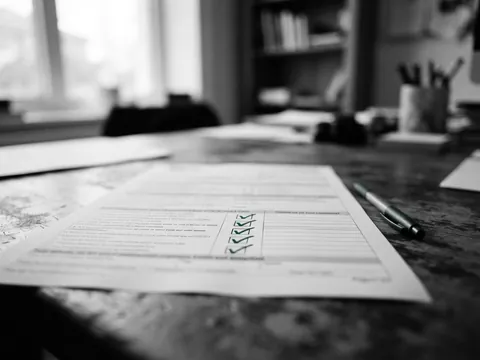
Before you submit, check five things: that the argument is yours, that every source is cited, that quotes and paraphrases are marked and accurate, that any AI use was allowed and is acknowledged, and that you have kept your drafts. It takes twenty minutes and protects the marks you worked for.
Originality
- Can you state your thesis in one sentence without looking?
- Is every paragraph's main claim your own, supported by sources rather than borrowed from them?
- Have you reused work from another assignment? Many universities treat self-plagiarism as misconduct unless allowed.
If the argument wobbles, revise it first using essay structure.
Citations
The University of North Carolina's Writing Center has a simple rule: when in doubt, give a citation. You still need to cite a source even if you put quotes in quotation marks, changed words to synonyms, paraphrased completely, or mentioned the author's name.
- Does every in-text citation have a matching reference, and every reference a citation?
- Is every reference real and correct? Check author, year, title, journal, volume and pages against the source.
- Did any reference come from an AI tool? If so, have you found and read it? Walters and Wilder's 2023 study found many ChatGPT references were fabricated, and many real ones had wrong numbers.
An annotated bibliography makes this check quick.
Quotes and paraphrases
- Is every exact phrase from a source in quotation marks?
- Does every paraphrase say the idea in your own words and structure, not the source's with synonyms swapped in?
- Have you checked each quote against the original for accuracy?
AI use and disclosure
- Is AI allowed in this assessment, and for what?
- Does your use stay within that, with you as the author?
- Have you acknowledged it in the form your course asks for? Some universities, such as UCL, ask you to describe how you used it rather than cite it.
For wording and examples of AI disclosure statements, see the guide at 21learn.org. For the rules paper by paper, see is using AI plagiarism?
Format and the brief
- Have you answered the question as set, not a version of it you preferred?
- Is the word count within the limit, counted the way your course counts it?
- Have you used the referencing style your course requires, consistently?
- Have you included every required part: title page, abstract, appendices, declaration?
- Is the file in the right format and named as instructed?
Read the brief one last time with your finished work open beside it. Most marks lost at the last minute are lost to the brief, not to the writing. Then read your introduction and conclusion together: they should promise and deliver the same argument.
Finally, submit early if you can. Upload systems slow down near deadlines, and a late penalty is the easiest mark to lose.
Keep your drafts
Keep your notes, outlines, drafts and version history until the work is marked and returned, and longer for big projects. They show how the work developed. If a marker has questions, they are your best evidence; how teachers check work explains why. For long coursework, the week-by-week plan in term papers with AI builds these records as you go.
More on this in Integrity.
FAQ
What should I check before submitting an essay?
Your argument, your citations, your quotes and paraphrases, any AI use and disclosure, and that you have kept your drafts.
Do I need to cite something if I paraphrase it?
Yes. A paraphrase uses someone else's idea, so it needs a citation even in your own words.
Should I run my essay through an AI checker first?
It will not tell you much reliably. Check your own process instead: sources, citations, disclosure and drafts.
How long should I keep my drafts?
At least until the work is marked and returned, and longer for dissertations and major projects.
Does the word count include references?
It depends on your course. Many exclude the reference list but include in-text citations; check your handbook.
Can I submit and then resubmit?
Some systems allow resubmission before the deadline and some do not. Check before you rely on it, and submit your best version first time.
What if I find a mistake after submitting?
Tell your tutor promptly, especially if it is a missing citation. Raising it yourself is usually far better than having it found.
This guide explains common rules; your institution's policy decides what is allowed on your work.
Sources
- PlagiarismThe Writing Center, University of North Carolina at Chapel Hill
- Three categories of GenAI use in assessmentUCL Teaching and Learning
- Fabrication and errors in the bibliographic citations generated by ChatGPT (Walters and Wilder, Scientific Reports 13, 14045)Scientific Reports